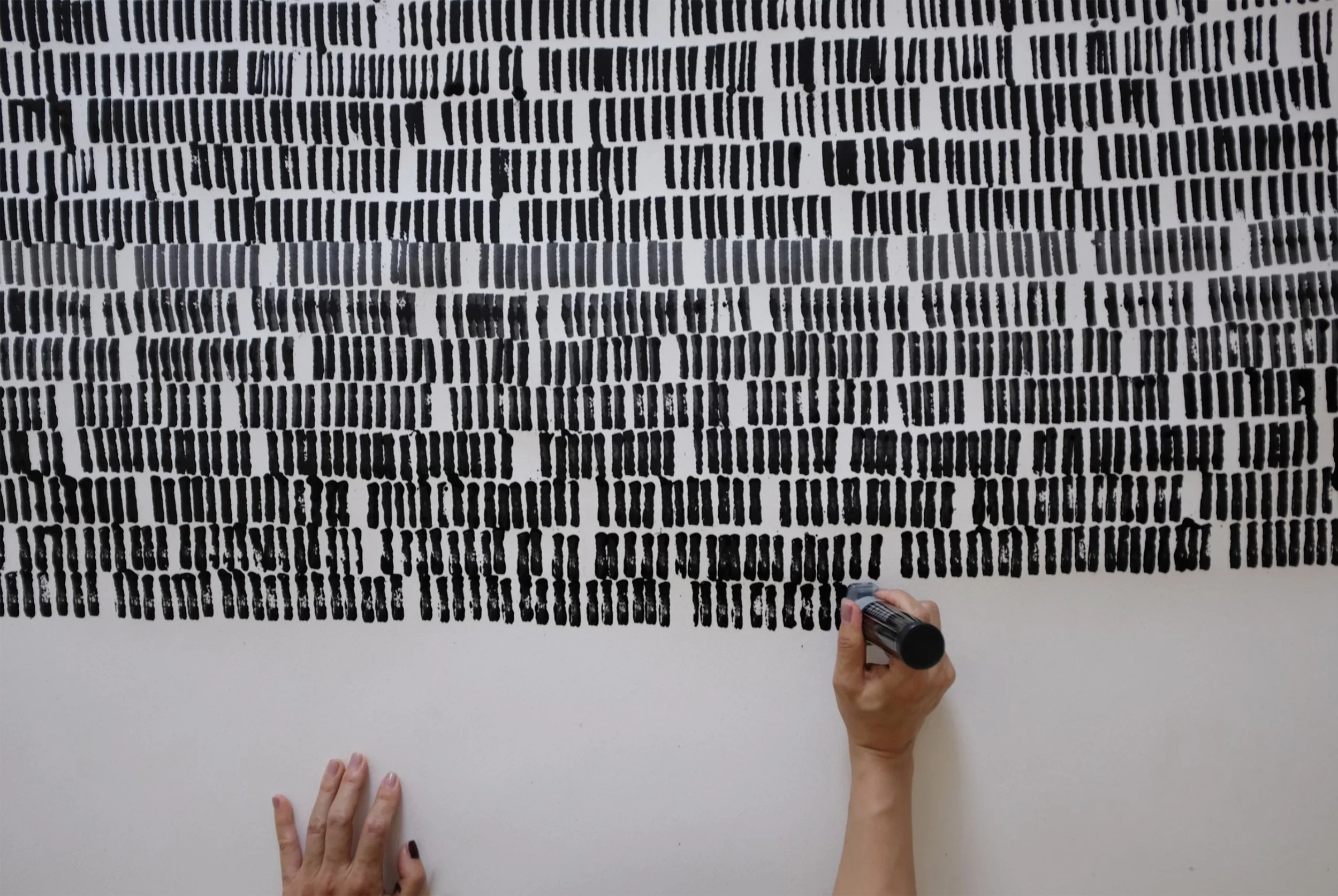
BLINK EFFECT AT BASEL SOCIAL CLUB (2026)
At Basel Social Club “The Office” (2026) a site-specific sound installation was exhibited, with interactive elements titled “Blink Effect”, created by Mieko Akutsu and Troy Pierce, curated by SOOT gallery.
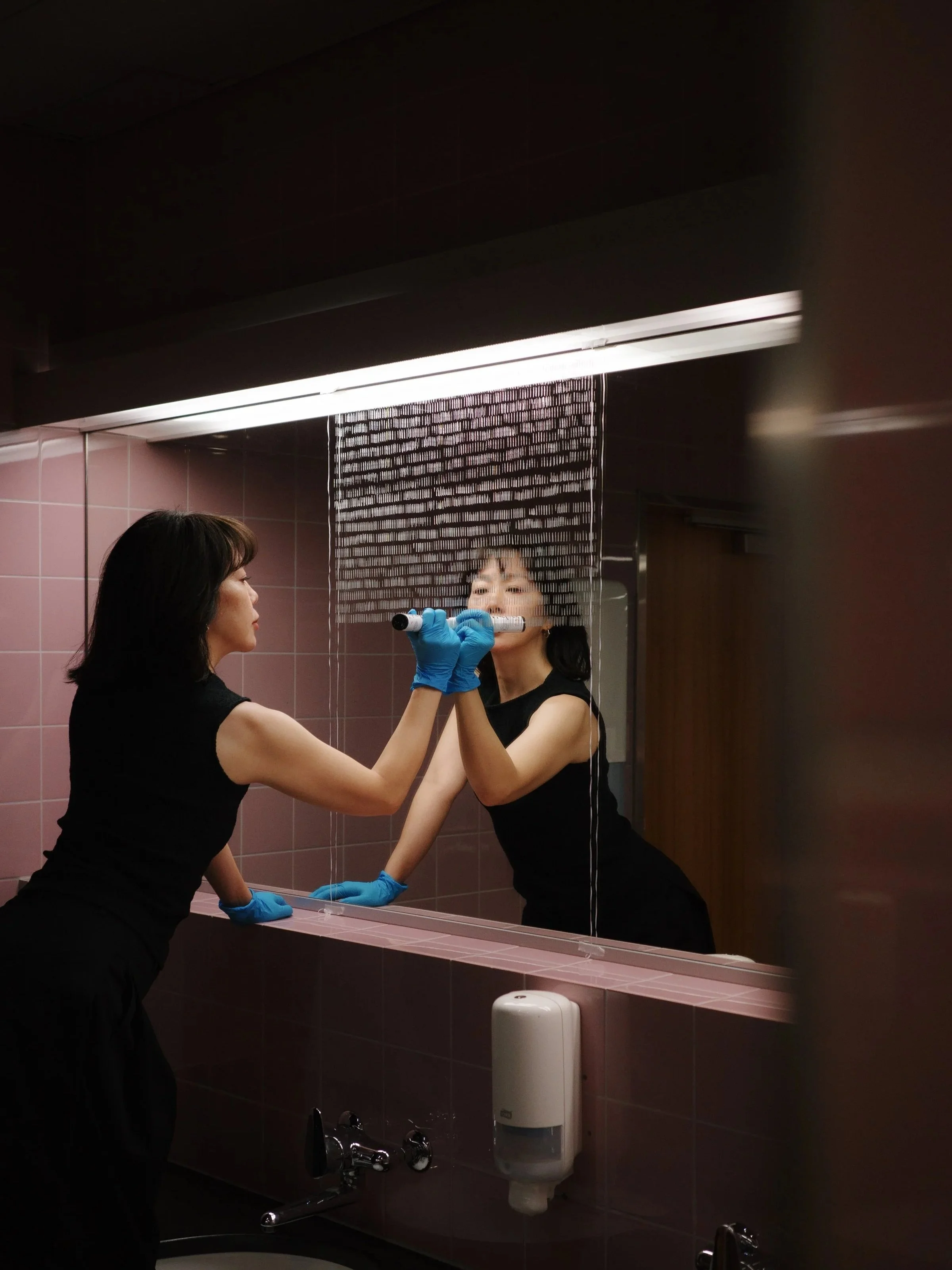
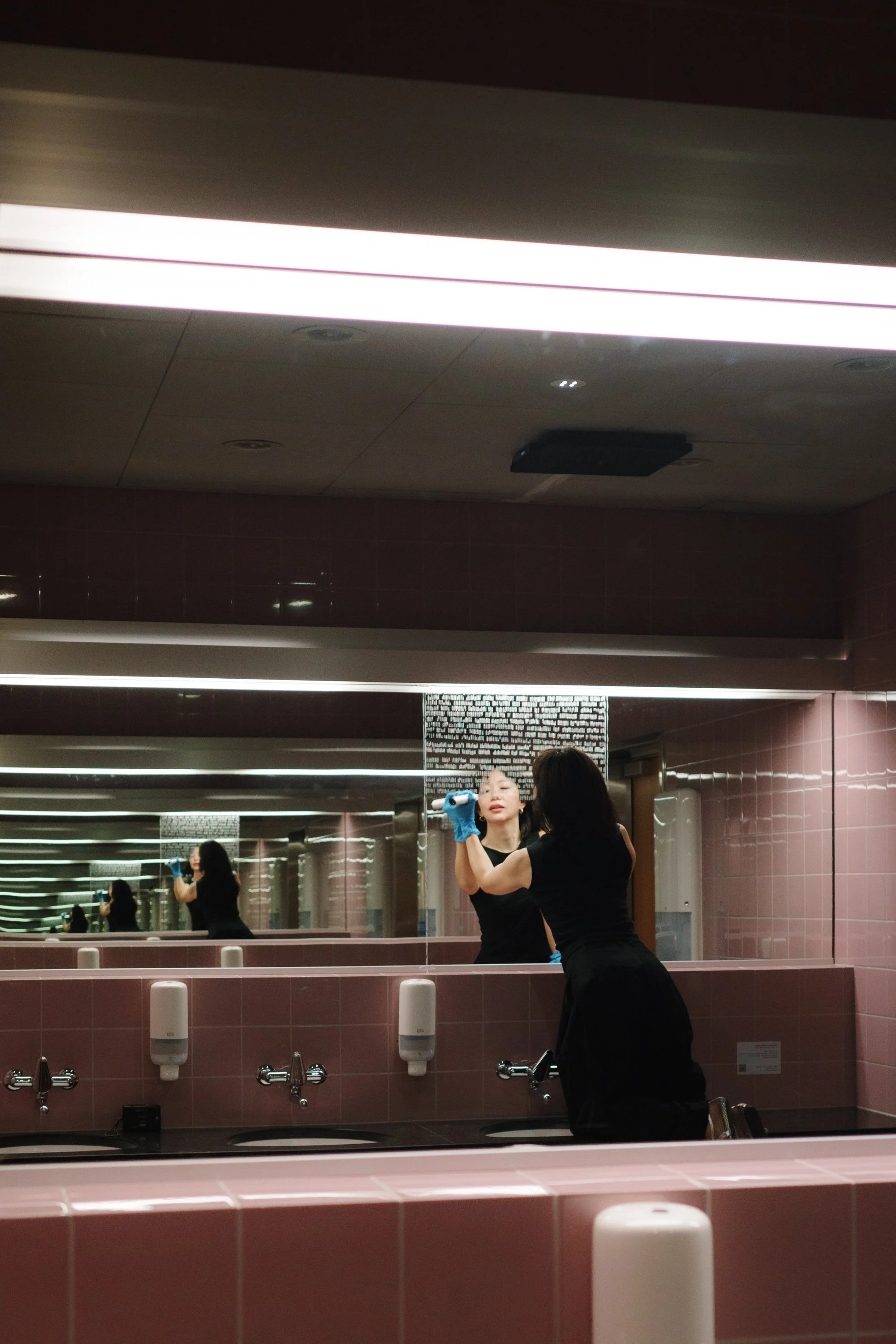
A 17 cm directional (ultrasonic) speaker will be installed on a mirror in the restroom. A visitor standing in front of the mirror will likely look at their own reflection. At that moment, the sound of blinking is suddenly triggered, audible only to that person. As they observe their reflection blinking, Troy’s sound composition merges with Mieko’s visual study, creating a private perceptual moment: a Blink Effect experienced by the viewer alone.
The work is based on Mieko Akutsu’s research-based visual study of blinking, combined with an original sound composition by sound artist Troy Pierce.
Drawing on visual perception theory, Akutsu explores the idea that what we “see” is not a direct representation of reality but rather a constructed image produced by the brain. This suggests that human perception itself is grounded in fundamental uncertainty, which led her to develop her Blink Study Series.
The project is supported by soot.toyko gallery.
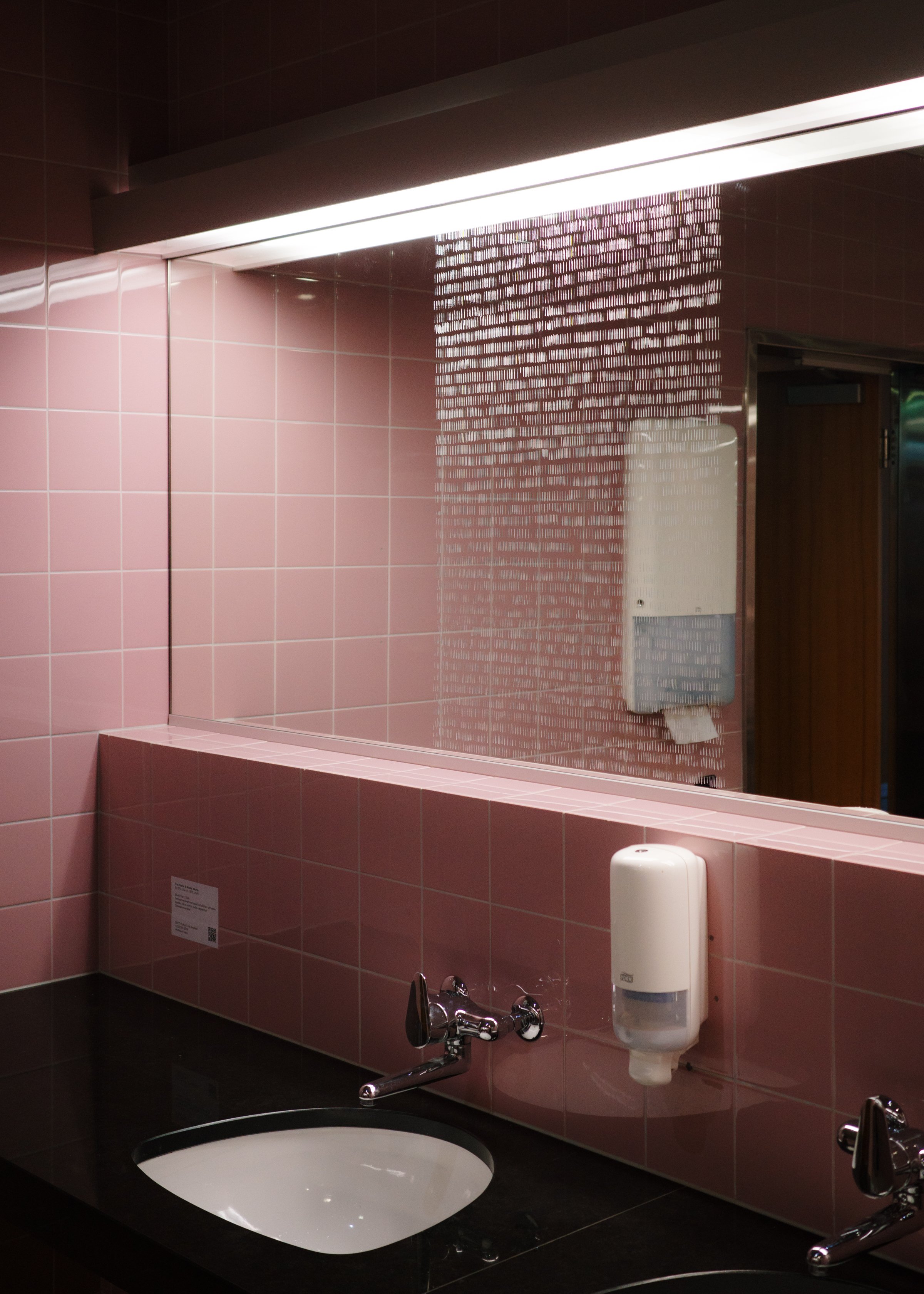
BLINK EFFECT
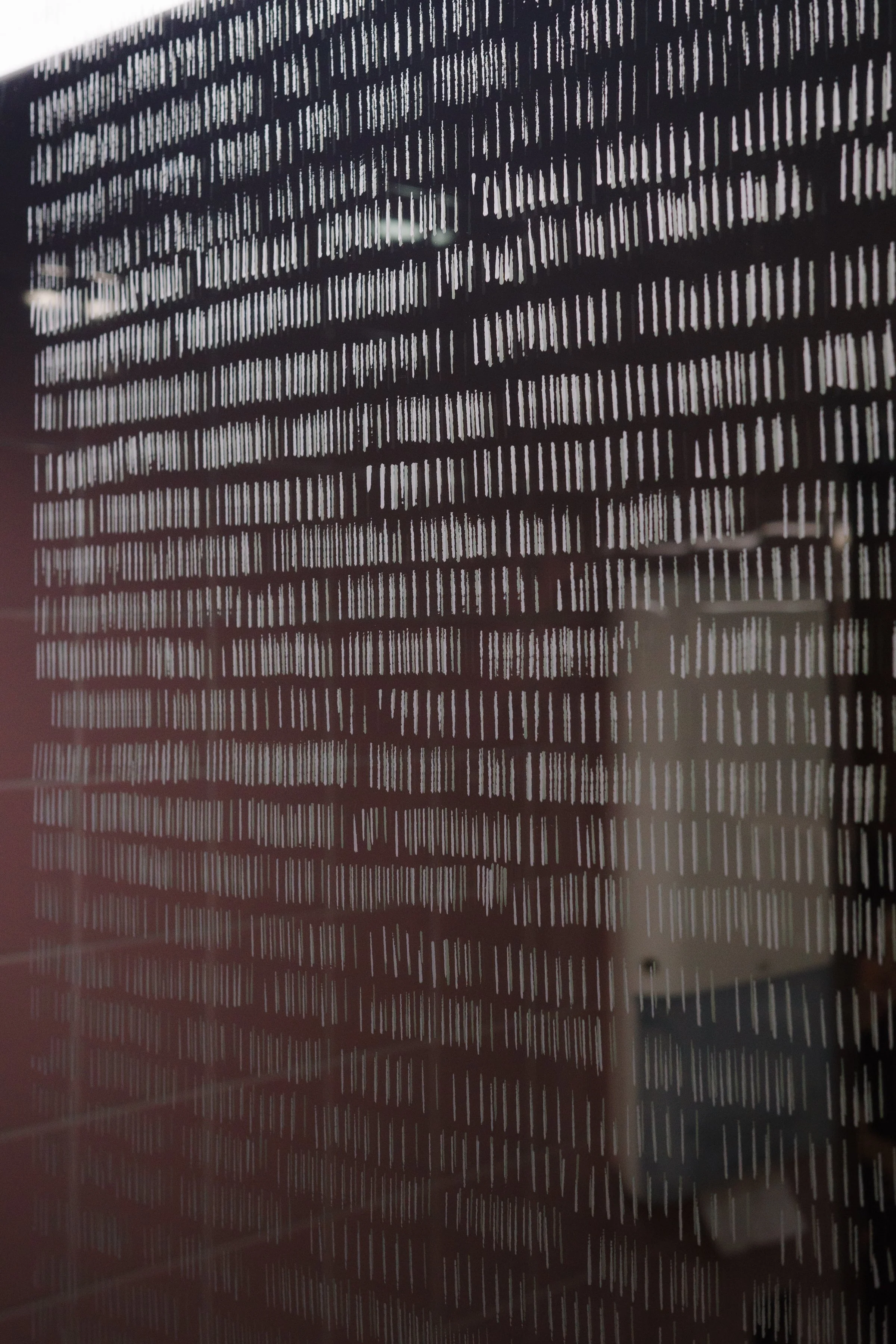
The collaboration between Mieko Akutsu and Troy Pierce extends the ideas of the “Blink” series into sound, translating a durational, physical act into another form of experience. While Akutsu’s works track time through the accumulation of marks, each line tied to the rhythm of a blink, Pierce approaches the series as a point of response, creating a body of sound that sits alongside the visual work rather than directly describing it.
Developed through time spent with the drawings, the sound works move between three perspectives, the maker, the viewer, and the material itself. In the first, Pierce focuses on the act of making, drawing from the repetition, breath, and physical strain involved in producing the work. In the second, the perspective shifts outward, reflecting how the pieces are experienced as a whole, where patterns and rhythms become more apparent over distance. The third looks at the fading of the ink over time, a subtle record of duration and effort, translated into sound through gradual reduction and disappearance.
Rather than acting as accompaniment, the compositions run in parallel to the drawings, offering another way to experience Akutsu’s focus on time and perception. Together, the visual and sonic elements create a shared space where attention moves between seeing and hearing, holding and letting go.